SwimSure™ starts with safety at the core. Our dual-safety method teaches Jump, Turn, Swim and Rollover-to-Backflloat, giving families peace of mind from the very first lesson.
Every child’s swim journey is unique, but the goal is always the same: safety, strength, and confidence in the water.
That’s why we teach through SwimSure™, a proven philosophy that combines decades of expertise with a nurturing, play-based approach. Built on measurable progress and child development principles, SwimSure™ gives every swimmer the foundation to learn safely, grow confidently, and love the water for life.
To bring SwimSure™ to life, our teachers follow a detailed teaching framework that outlines 100+ developmental milestones across 11 progressive levels. This nationally proven and Emler Swim School Network exclusive program ensures children move forward with clear goals and purpose. Each level is designed with progressive developmental milestones, so kids advance step by step in a way that feels encouraging, never overwhelming.
Children learn best when they’re having fun, which is why SwimSure™ is play-based at its core. Props, songs, games, and prizes keep swimmers engaged and learning exciting and memorable. Lessons the highlight of your child’s week, while still building real skills and lifelong safety.
With SwimSure™, every child has a clear path forward, and every parent has the confidence of knowing their swimmer is learning through the gold standard in swim education.
SwimSure™ starts with safety at the core. Our dual-safety method teaches Jump, Turn, Swim and Rollover-to-Backflloat, giving families peace of mind from the very first lesson.
With 100+ milestones, SwimSure™ guides children from their first splash to independent swimming, building confidence and skill every step of the way.
SwimSure™ is taught by trusted teachers with advanced training and expert guidance. Every lesson uses age-appropriate methods that make learning fun and effective.
Progress in SwimSure™ builds more than skill, it builds confidence. With positive reinforcement, swimmers gain courage, pride, and self-belief in and out of the water.
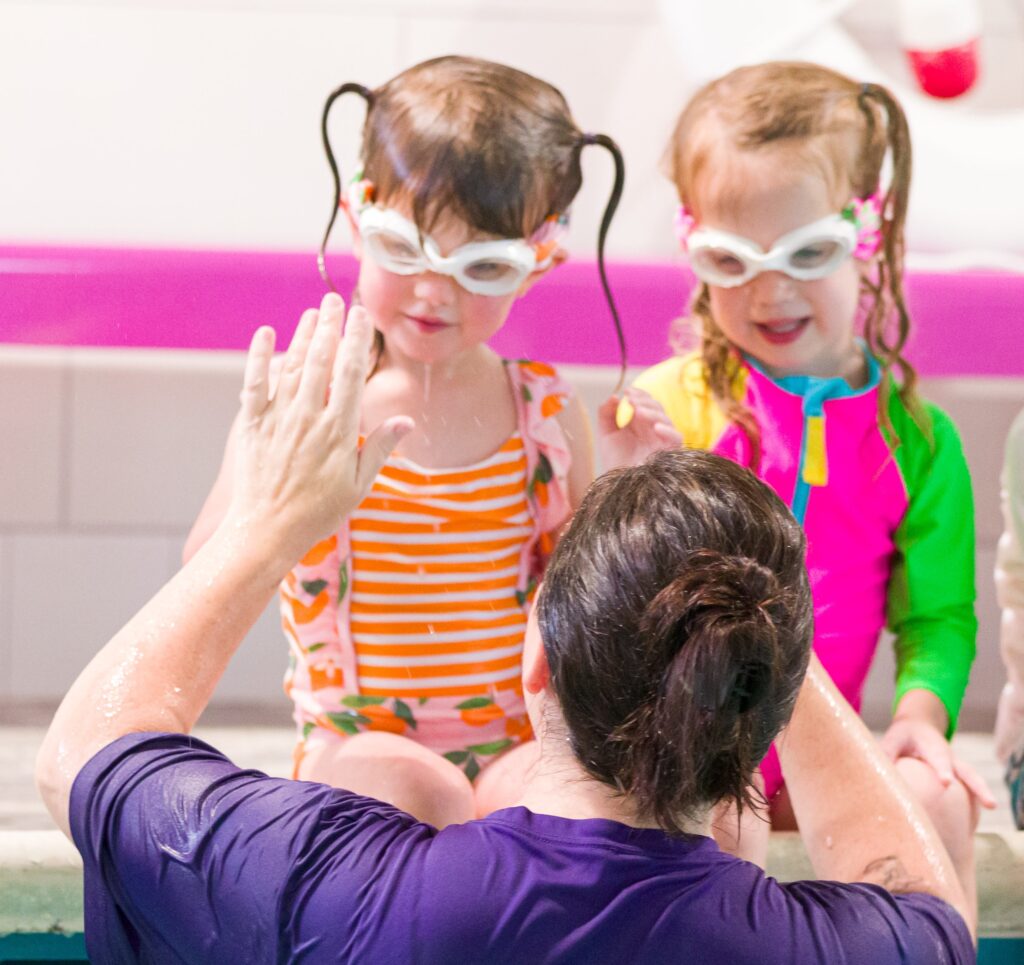
In our 3-year-old classes (Levels 3, 4, and 5), we use toys and play to make learning fun. At the end of class, each swimmer gets to swim out to a themed prize they can take home! All swimmers also receive a stamp at the end of class to celebrate their effort.
Swimming is a critical life skill. It not only teaches water safety but also provides lifelong recreation, fitness, and confidence.
Repetition is key to mastery. Practicing skills consistently helps swimmers develop muscle memory and lasting confidence.
No, we do not teach ISR. Our philosophy is rooted in a gentle, nurturing approach that builds both safety and a lifelong love of the water.
While we agree that water safety is essential, we do not use back-float “drown-proofing” methods. Instead, we teach infants and toddlers to swim using proven, developmentally appropriate techniques. Our curriculum includes core safety skills such as rollover breathing and self-rescue, but taught in a way that empowers children without causing fear or trauma.
For more than four decades, our gentle methods have successfully taught thousands of children to not only recover from accidental falls into the water, but also to feel confident, safe, and happy while swimming.
The belt helps with body position, keeping hips elevated so swimmers can focus on proper technique and timing.
Three times a year, swimmers participate in a special lesson focused on boat safety. During this class, children practice important skills such as:
Putting on and swimming in a life jacket
Floating in a life jacket
Yelling for help if needed
Learning what to do (and not do) if they see a friend in trouble
These lessons are fun and engaging — children even get to sit in a blow-up boat — while also teaching vital lifesaving skills.
At first, fins provide propulsion so swimmers can practice new strokes and distances. As their skills strengthen, fins are gradually removed to ensure independence and correct technique.
Our curriculum is built on two core water safety skills that every child practices from their very first lessons:
Jump-Turn-Swim (JTS): Children learn to enter the water, turn around, and swim towards what they last saw. This teaches them to find the closest point of safety, not just swim toward where they came from.
Roll-to-Backfloat: Children practice rolling onto their back to take a breath and rest before continuing to swim. This technique is developmentally appropriate for younger swimmers and helps them build confidence to pause, breathe, and keep going.
Together, these dual safety skills give children the tools to handle a variety of real-world water situations.
Fins help swimmers develop a strong kick, improve body position, and feel confident moving forward in the water.
To reinforce the importance of water safety, every class begins with a simple Safety Pledge. This fun, engaging routine helps remind children of the rules and why water safety matters — building lifelong safe habits from the very start.
Held three times a year, Clothesline Day gives children the experience of swimming while fully clothed. At the beginning of class, swimmers practice the Jump, Turn, Swim safety skill while wearing a set of clothes over their swimsuit. This helps them understand what it feels like to be in the water unexpectedly and builds confidence in handling real-world water safety situations — all in a safe, nurturing environment.
Swimming is a lifelong safety skill, not a seasonal activity. We encourage families to think of lessons as a long-term commitment — just like school or other sports. Consistent, year-round participation ensures progress doesn’t stall and skills don’t fade.
Children should remain in lessons until they can comfortably and confidently swim the length of the pool using multiple strokes (typically freestyle and backstroke). For many families, that means staying in lessons for several years, often through preschool, elementary, and even into stroke clinics or swim team.
When your child masters all required skills, they’ll receive a certificate of achievement. You can then update your class schedule through the Parent Portal (iClassPro) or with help from our staff. If your preferred class time is full, we’ll place you on a waitlist and your child can continue building skills in their current class until a spot opens.
If your child’s class continues to include peers at a similar level, the instructor may simply begin teaching the next set of skills. If a class change is needed, we’ll help you select a new day/time through the Parent Portal or at the front desk.
Yes. Many children repeat levels and that’s perfectly normal. Our goal is to build lasting confidence and safe swimming skills, not to rush advancement. Some children may plateau or need extra time with certain techniques, and our teachers are trained to keep them motivated and progressing at the right pace.
Your child is continuously evaluated by our instructors and managers. Progress is tracked in the Parent Portal (iClassPro), discussed during Show-offs, and shared on your child’s benchmark card. Once all skills for a level are mastered, your swimmer will officially advance to the next level.
Every child progresses at their own pace. Some skills may come quickly, while others take time and practice. What’s most important is that your child builds a strong, safe foundation before advancing. On average, most swimmers spend several months in each level.
You can use our online swim assessment tool or ask our front desk team for guidance. We’ll make sure your child is placed in the level that best matches their age and skills within our step-by-step curriculum.
Every child progresses at their own pace depending on comfort level, age, frequency of lessons, and practice outside of class. With consistent attendance and encouragement, most children build water safety skills within a few months and continue developing toward full swimming independence over time.
The rollover breath is a core safety skill. It teaches swimmers to float, rest, and breathe if they become tired in the water before swimming to safety.
We teach a progression of breathing techniques: front breath, rollover breath, and side breath. Learning multiple ways to breathe ensures safety and confidence in different situations.
The SwimSure™ Difference
At Emler Swim School, every lesson follows our proven SwimSure™ curriculum, a nationally trusted approach developed through more than 100 million successful swim lessons. Designed with safety as the foundation, SwimSure™ helps children gain confidence, build skills, and develop a lifelong love of the water.
Our method is built around two core safety skills: Jump Turn Swim and Jump to Backfloat, giving every swimmer the tools they need to stay safe in and around the water. From there, we focus on progressive milestones that teach independence, coordination, and strength at every level.
SwimSure™ curriculum is built on:
SwimSure™ is more than a curriculum, it’s a journey of safety, confidence, and growth that helps every child feel capable, strong, and safe in the water.

